However, understanding what your blood alcohol concentration (BAC) is can play a crucial role in helping you make safe and responsible decisions when you are drinking. Whether you are going out with your friends or you are simply curious about how alcohol works on your system, a BAC level calculator can be a powerful tool.
A calculator is a helpful tool that can give you a general idea of the amount of alcohol in your system by considering different factors, including your weight, gender, the number of drinks you have consumed, and the amount of time you have been consuming them. In this informative article, we will discuss what a BAC level is, how a BAC calculator works, the different factors that affect a BAC level, and how you can effectively use a BAC calculator tool.
What Is Blood Alcohol Concentration?
The Blood Alcohol Concentration (BAC) tells you how much alcohol is in your blood. It is expressed as a percentage. A BAC of 0.02% will cause a slight relaxing effect, whereas a BAC of 0.05% will cause a reduction in your level of physical coordination and alertness. In most countries, an individual who has a BAC of 0.08% or more will be considered legally drunk.
A BAC of 0.10% or more will severely limit an individual’s level of functioning. In all cases, BAC levels directly impact an individual’s level of physical coordination, reaction time, decision-making skills, and cognitive abilities.
What Is a BAC Level Calculator?
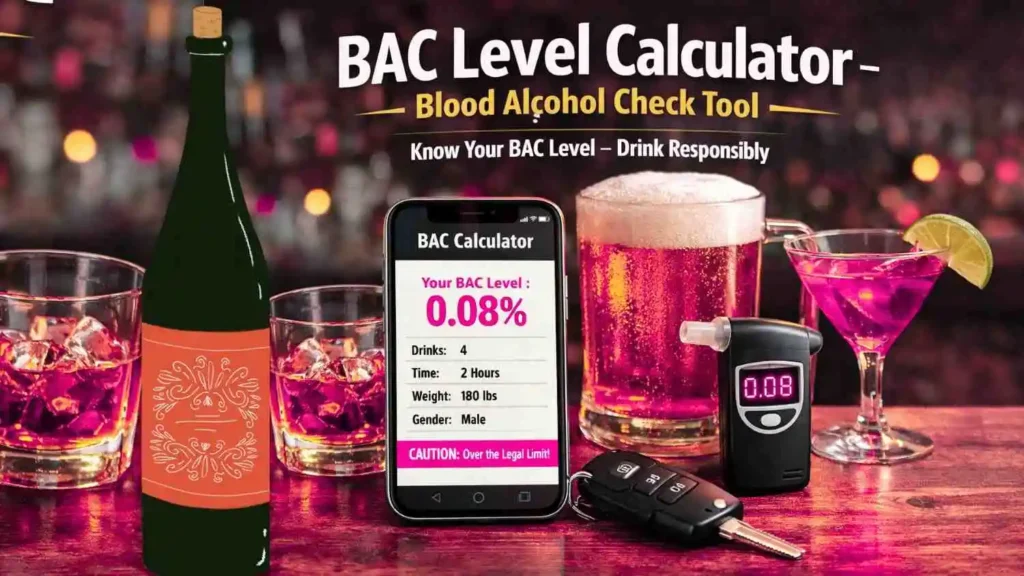
The BAC Calculator is an online digital tool used to compute your current level of blood alcohol content based on some basic but very important personal and consumption-related factors. Generally, it involves a few basic factors such as your weight, gender, number of drinks consumed, type of drink, and length of time spent drinking. By using all of these factors, a particular formula is used to calculate how alcohol enters your system and how your body processes it.
How to Work
A BAC level calculator uses a scientific formula, usually based on the Widmark formula, to calculate the amount of alcohol in your system. The underlying theory behind a calculator is that, once consumed, a certain amount of alcohol enters your bloodstream at a rate depending on your body type, gender, and food consumption. Meanwhile, your liver works to gradually process and remove the alcohol from your system.
This tool calculates your BAC level by balancing the amount of alcohol consumed with the amount your system works to remove. It then calculates your estimated BAC level at a given time.
Factors That Affect Your BAC
However, the amount of blood alcohol concentration in your system is not necessarily determined by the number of alcoholic beverages you have consumed. There are a few key factors that determine the effect of alcoholic beverages on the human system.
The weight of the individual, the gender of the individual, the rate at which the individual’s metabolism is functioning, the strength of the alcoholic beverages consumed, the individual’s dietary habits, and the level of hydration are a few key factors that determine the effect of the alcoholic beverages on the individual.
1. Body Weight
Generally, an individual who has a greater body weight will possess a greater amount of water content in their body. This will then reduce the level of alcohol in their bloodstream. In other words, an individual who has a greater body weight will possess a lower BAC in comparison to an individual who has consumed a similar amount of alcohol.
2. Gender
The biological differences imply that women may have higher BAC levels compared to men, even if they consume the same quantity of alcohol. The major cause for this is that women have a higher percentage of body fat and lower percentages of total body water content. As a result, the alcohol is not diluted in the blood. In addition, women have lower amounts of the enzyme alcohol dehydrogenase. As a result, women have a higher BAC level compared to men. The BAC level is also maintained for a longer time in women.
3. Type of Drink
There are different types of alcoholic drinks, each of which has a different level of alcohol content. This, in turn, will directly influence your BAC level. In general, beer has a low level of alcohol content, wine has a moderate level of alcohol content, and drinks such as spirits have a very high level of alcohol content. A BAC level estimator will consider all of these factors and provide you with a more accurate idea of your BAC level.
4. Drinking Speed
However, if you consume alcoholic drinks at a fast pace, your BAC levels are likely to increase at a similar rate. This is because your body does not have enough time to process or digest the drinks between successive intervals. As a result, your levels of alcohol content in your bloodstream increase substantially within a short period, thereby increasing the risks of adverse impacts on your body.
5. Food Intake
Taking food before or at the time of consumption of alcoholic drinks enables a reduction in the rate at which alcohol enters the bloodstream, thereby reducing the BAC. A diet rich in fats and proteins enables a reduction in the rate at which alcohol enters the bloodstream, thus giving the body enough time to process it.
6. Metabolism Rate
Each person metabolizes alcohol at a different rate, and this influences the rate at which an individual’s BAC rises and falls. Other factors that may influence the rate at which an individual metabolizes alcohol include an individual’s age, health condition, liver condition, and genetics.
Conclusion
The BAC Level Calculator is a useful calculator that is not only handy but also very easy to use. It can help you determine the level of alcohol in your blood. It is important to know the effect of alcohol on your body and responsibly use the calculator to avoid any risky situations and promote a responsible attitude towards alcohol consumption.
It is worth noting that the BAC level checking tool is simply an estimate; the real-world scenario may differ. Therefore, it is imperative that you exercise caution and avoid any activity or driving when you are not sure. The BAC level estimator will assist you in making the right choices regarding your safety and well-being.
FAQ’s
Q1. What is the legal BAC limit?
In most cases, the limit is 0.08%, but this can change depending on where you are.
Q2. Can medications affect BAC?
Yes, some medicines may interact with alcohol, which could result in increased impairment at a lower level of BAC.
Q3. Does drinking coffee decrease the amount of BAC?
Coffee does not decrease the amount of BAC. Although you may feel awake after drinking coffee, the amount of alcohol in the blood remains the same.
Q4. Does food intake affect the amount of BAC?
If you take food before drinking, the amount of BAC will decrease. This is because the food will slow down the amount of alcohol absorbed by the body.
Q5. Is a BAC level check calculator better than a breathalyzer?
No, a breathalyzer is better than a BAC calculator because it measures the BAC level directly from the lungs.